


Struggling to understand how hotspot technology has evolved? Wi-Fi started with simple wireless networks like ALOHAnet in the 1970s. Today, it powers everything from mobile hotspots to 5G connections.
This blog will break down its journey step by step. Keep reading—it’s a fascinating story!
Key Takeaways
- Hotspot technology started in the 1970s with ALOHAnet, which used radio waves for data sharing. This laid the foundation for modern Wi-Fi and IEEE 802.11 standards, introduced in 1997.
- Public Wi-Fi hotspots first appeared in 1999 at Starbucks and grew quickly as T-Mobile expanded them to airports and libraries worldwide by the early 2000s.
- The shift from 3G to 4G LTE brought faster speeds, smoother connections, and mobile hotspots that let smartphones act as portable internet hubs.
- Modern 5G hotspots now deliver ultra-high-speed internet using advanced tech like millimeter waves and MIMO systems, supporting more devices at once with low delay.
- Challenges like security risks, high costs, and limited rural coverage remain but are addressed using stronger encryption methods and new infrastructure like small-cell towers.
The Origins of Wi-Fi Technology
Wi-Fi’s roots trace back to the 1970s, with early experiments in wireless networking. This laid the groundwork for modern tools like IEEE 802.11 standards and wireless LANs.
ALOHAnet and Early Wireless Networks
ALOHAnet, created in 1971, was a major leap for wireless communications. It allowed computers to share data over radio signals. Developed at the University of Hawaii, it used packet-based data transfer across the airwaves.
This system laid the foundation for modern wireless LANs and Wi-Fi networks.
Early wireless systems faced limits like low speeds and interference on the ISM band. Yet, they paved the way for IEEE 802.11 standards later on. ALOHAnet’s method of handling lost packets inspired solutions still used today in internet connections worldwide.
The Development of IEEE 802.11 Standards
IEEE 802.11 standards shaped modern Wi-Fi. In 1997, the first version offered speeds of only up to 2 Mbps for wireless local area networks (WLAN). This laid the foundation for faster and smarter developments later.
By 1999, IEEE 802.11b improved data rates to 11 Mbps, using the ISM band without cables or wires. It made wireless internet more practical for homes and businesses. Over time, enhancements like dual-band routers and multiple antennas boosted reliability and speed, meeting growing network demands.
Technology changes fast; connectivity must keep up.
The Advent of Wi-Fi Hotspots
Wi-Fi hotspots changed how we connect to the internet. They made wireless access simple, fast, and widely available in public places like cafes and airports.
The First Public Wi-Fi Hotspots
Starbucks launched the first public Wi-Fi hotspots in 1999. These wireless access points let customers browse the internet while sipping coffee. The service relied on radio signals and quickly became popular.
T-Mobile partnered with chains like Borders to expand hotspot availability in early 2000. Airports, libraries, and hotels soon adopted this technology too. By offering easy internet access, hotspots changed how people used computers outside their homes or offices.
Growth and Global Adoption
Wi-Fi hotspots exploded in popularity during the early 2000s. Airports, cafes, and libraries started offering public access points for high-speed internet. The Wi-Fi Alliance played a major role in standardizing wireless fidelity technology, making it easier to connect devices worldwide.
T-Mobile was among the first to push global hotspots for travelers and business users. Soon after, companies like AT&T Corporation jumped on board too.
Expansion went hand-in-hand with better infrastructure. Dual-band routers improved connection quality by using multiple radio bands like ISM band frequencies. Wireless LAN networks became staples in homes and businesses, powering computers and even baby monitors.
With time, countries adopted broader wireless spectrum allocations for public use to meet rising demand. Today, cities across continents rely on large-scale Wi-Fi connections as part of daily life—bridging gaps between people and technology faster than ever before.
The sky’s the limit once your town has strong Wi-Fi, says tech expert Vic Hayes, often called the “Father of Wi-Fi.”
The Rise of Mobile Hotspots
Smartphones changed how we connect. They turned into mini internet hubs, letting people share their mobile data with others nearby.
Early Smartphone Hotspot Capabilities
Early smartphones with hotspot capabilities were game-changers. Devices like the iPhone 3GS and Android phones in the late 2000s began allowing users to share their mobile data. This meant your phone could act as a portable Wi-Fi access point, providing internet for laptops or tablets on-the-go.
At that time, speeds relied heavily on 3G networks. Connection strength was often slow due to limited network capacity and coverage. Users could tether devices using USB cables or Bluetooth before wireless hotspots improved ease.
These early features laid foundations for today’s high-speed mobile broadband advancements seen in 4G LTE and 5G systems.
Expansion of Public Wi-Fi Hotspots
Cities began installing Wi-Fi access points in busy areas like parks, cafes, and airports. This made high-speed internet more accessible to the public. Companies such as AT&T Corporation and T-Mobile expanded their networks to support this demand.
Public places became hubs for wireless technology, helping people stay connected on the go.
The growth of consumer electronics fueled this shift. Dual-band routers improved connectivity by reducing interference from other radio signals. Wireless LANs used frequency bands like ISM for better coverage and speed.
These advancements paved the way for mobile hotspots, leading into new possibilities with 3G and 4G LTE technology.
The Transition to 3G and 4G LTE Hotspot Technology
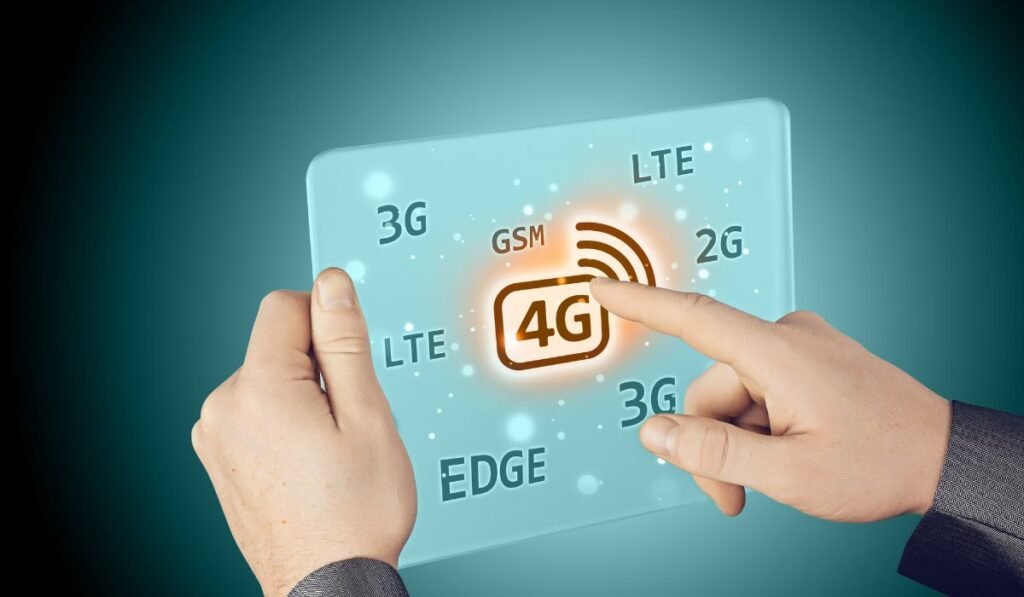
3G and 4G LTE brought faster speeds and better connections. These advancements turned mobile devices into powerful, portable internet hubs.
Enhanced Speed and Connectivity
Hotspots jumped ahead with 3G and 4G LTE technology. Faster data transfer became a reality, allowing smoother video streaming and quicker downloads. Mobile broadband opened doors to high-speed internet on the go.
These advancements used improved radio waves and multiple input-multiple output (MIMO) systems for better connectivity.
LTE hotspots also increased network capacity, making lag less of an issue. Devices could handle more users at once without slowing speeds. Public Wi-Fi expanded as a result, creating reliable connections in airports, cafés, and parks.
High bit rates became standard in many areas thanks to enhanced wireless LAN upgrades.
Mobile Broadband Advancements
3G and 4G LTE changed mobile broadband forever. They brought faster speeds and smoother wireless communication. Phones, tablets, and laptops could connect on-the-go with fewer delays.
Networks like AT&T Corporation improved coverage to meet growing demand.
Mobile networks started using multiple-input multiple-output (MIMO) technology for better data transfer. This boosted network capacity while allowing more users at once. With high-speed internet becoming common through these upgrades, a seamless shift toward 5G hotspot technology became inevitable.
The Evolution to 5G Hotspot Technology
5G hotspots deliver lightning-fast speeds and low lag. They harness advanced tech like millimeter waves and multiple-input, multiple-output systems for better performance.
Key Features of 5G Hotspots
5G hotspots offer blazing-fast internet speeds. They use millimeter wave technology to deliver high-speed data transfer, perfect for streaming or gaming without buffer. With multiple-input and multiple-output (MIMO) systems, these devices handle many users at once.
This creates stronger connections even in crowded areas.
They support ultra-high frequency bands for better performance. Dual-band routers ensure backward compatibility with older devices. Enhanced network capacity allows seamless integration with the Internet of Things (IoT).
These features make 5G hotspots a game-changer in wireless networking.
The Role of 5G in Future Connectivity
5G boosts connectivity with faster speeds and lower delays. It allows instant data transfer, making video calls and streaming smoother. Using a broader radio spectrum, it supports more devices at once without slowing down.
This suits crowded places like stadiums or airports.
New networks, such as non-terrestrial ones, expand access to rural and remote areas. 5G also powers the internet of things (IoT). Smart cities can have connected cars, appliances, and streetlights working together efficiently.
Businesses benefit from higher network capacity for real-time operations. It’s rewriting how we stay linked in daily life and workspaces.
Impact of Hotspot Technology on Society and Industry
Hotspot technology has reshaped how we connect, work, and share information. It fuels faster communication and supports industries relying on high-speed internet and data transfer.
Transformation in Communication
Wi-Fi hotspots have changed how people communicate. They made it faster and easier to share information. Before wireless technology, communication relied on physical connections like cables.
With Wi-Fi, messages traveled through radio waves, connecting devices without wires.
5G hotspot technology took this further. It brought higher speeds and lower delays in signal delivery. Video calls now feel instant, even across the globe. Businesses rely on these tools for fast data transfer and smooth meetings online.
This leads directly into its impact on industries worldwide.
Influence on Businesses and Industries
Hotspot technology changed how businesses work. Wireless LAN and portable hotspots let employees stay connected anywhere. Offices use dual-band routers to handle fast data transfer, boosting team productivity.
High-speed internet through hotspots also supports remote workers and global teams.
Companies like AT&T Corporation rely on mobile broadband to expand services. Retailers offer Wi-Fi access points to attract customers, improving their shopping experience. Consumer electronics brands design devices with backward compatibility for smooth connectivity in offices or homes.
This shift increases efficiency and opens new ways to connect industries worldwide.
Future Possibilities Enabled by 5G
Businesses are already feeling the shift, but 5G opens doors to far greater opportunities. Faster data transfer and stronger network capacity mean innovations like autonomous cars, augmented reality (AR), and telemedicine will progress rapidly.
Fixed wireless access (FWA) can connect rural areas without traditional cable internet infrastructure.
Non-terrestrial networks could provide global hotspot coverage using satellites. Devices in smart homes or industrial IoT systems will benefit from ultra-high-frequency connections and low latency.
With multi-user MIMO technology, public spaces can host more users without slowing speeds. This sets the stage for smarter cities and seamless digital experiences everywhere.
Challenges and Considerations
Hotspot technology has grown fast, but it’s not without flaws. Issues like data safety and reliable coverage can create hiccups for users and businesses alike.
Security Concerns
Cybersecurity remains a major issue for hotspot users. Hackers can intercept data sent over public Wi-Fi networks, exposing personal information. Fake hotspots might trick users into connecting, making their devices vulnerable.
Using dual-band routers or secure connections like VPNs helps reduce risks.
Wi-Fi has vulnerabilities in encryption methods like WPA2, which hackers can bypass to steal data. The rise of IoT adds more weak points, increasing threats on shared networks. Businesses and individuals must prioritize better network protection to safeguard sensitive information from attacks.
Infrastructure and Coverage Issues
Expanding hotspot coverage takes time and effort. Setting up proper infrastructure can be costly, especially in rural spots. City areas often get priority, leaving remote places with weak signals or none at all.
5G hotspots need advanced towers and network capacity. These require updates to existing systems like wireless LANs and cable internet lines. Weather, terrain, or high user traffic also impact signal strength, causing slow data transfer for many users at once.
Privacy and Data Management
Wi-Fi hotspots, while convenient, carry risks for user privacy. Public networks can expose personal data like passwords or banking details to cybercriminals. Hackers often exploit weak encryption or unsecured connections in these systems.
Using Virtual Private Networks (VPNs) helps safeguard sensitive information on public Wi-Fi.
Data management challenges grow with 5G technology and high-speed internet use. Larger amounts of shared data need secure handling to protect users’ rights. Companies must respect laws like GDPR in Europe or CCPA in California to avoid misuse of stored information.
Security concerns push industries toward better practices as they expand hotspot coverage globally.
Future Trends in Hotspot Technology
Hotspot technology is marching forward, embracing IoT systems, smarter gadgets, and faster data speeds—come explore the next decade of this tech revolution!
Beyond 5G: Looking Ahead
Networks will get faster and smarter after 5G. Upcoming technologies like IEEE 802.11ah and cognitive radio could reshape connectivity. These innovations aim to handle more devices, boost internet speed, and improve coverage in rural areas.
Integration with IoT and smart tech will grow stronger. Devices using the ISM band may work together seamlessly, making automation common at home or in factories. Next-gen hotspots might even use ultra-high frequency for quicker data transfer rates.
This opens doors for better industrial scientific applications and consumer gadgets alike!
Integration with IoT and Smart Technologies
As hotspot technology advances, its blend with IoT devices transforms connectivity. Smart appliances like fridges or thermostats now rely on Wi-Fi access points to send data quickly and efficiently.
This integration boosts convenience, letting these devices communicate without user input.
5G hotspots take this further by supporting more connected gadgets at once. Digital beamforming enhances network capacity for smart systems in homes and cities. From wireless LAN setups to industrial use of the ISM band, this pairing powers seamless automation and smarter living solutions.
Predictions for the Next Decade
IoT and smart technologies will fuel the next phase of hotspot innovation. Wireless access points could become smarter, connecting more devices with minimal delays. As network capacity grows, hotspots might rely on artificial intelligence to manage traffic smoothly.
5G will likely pave the way for ultra-high-speed internet in remote areas too. Fixed wireless access (FWA) may replace cable internet in under-served regions. Dual-band routers could evolve into tri-band or multi-frequency systems for better performance.
Wi-Fi technology might even blend with white space spectrum to extend connectivity beyond current limits.
FAQs
1. What is the history of Wi-Fi technology?
Wi-Fi technology began with the IEEE 802.11 standards, developed to enable wireless LAN connections using radio waves for data transfer. It gained momentum when Vic Hayes and others formalized its use under the Wi-Fi Alliance.
2. Who played key roles in developing hotspot technology?
Vic Hayes, often called “the father of Wi-Fi,” led early developments around wireless fidelity. John O’Sullivan contributed breakthroughs for high-speed internet over radio signals, while Hedy Lamarr’s work on frequency hopping laid groundwork for secure communication.
3. How did the IEEE shape wireless networks?
The Institute of Electrical and Electronics Engineers (IEEE) created critical standards like IEEE 802.11-2007 and IEEE 802.11af, which improved network capacity, backward compatibility, and dual-band router performance.
4. What role does the ISM band play in Wi-Fi?
The industrial scientific medical (ISM) frequency band allows devices to send data through ultra-high-frequency radio signals without interference from licensed transmissions.
5. How has hotspot technology evolved with companies like AT&T and T-Mobile?
AT&T Corporation pioneered fixed wireless access (FWA), while T-Mobile Home Internet expanded global hotspots by offering cable-free solutions compatible with consumer electronics.
6. Why is backward compatibility important in modern networks?
Backward compatibility ensures older devices can still connect to new systems like single-user MIMO or advanced IoT setups without losing functionality across Wi-Fi access points or routers labeled with the iconic Wi-Fi logo!


